How Mexico City Is Making Bus Transit Faster: 3 Strategies That Work
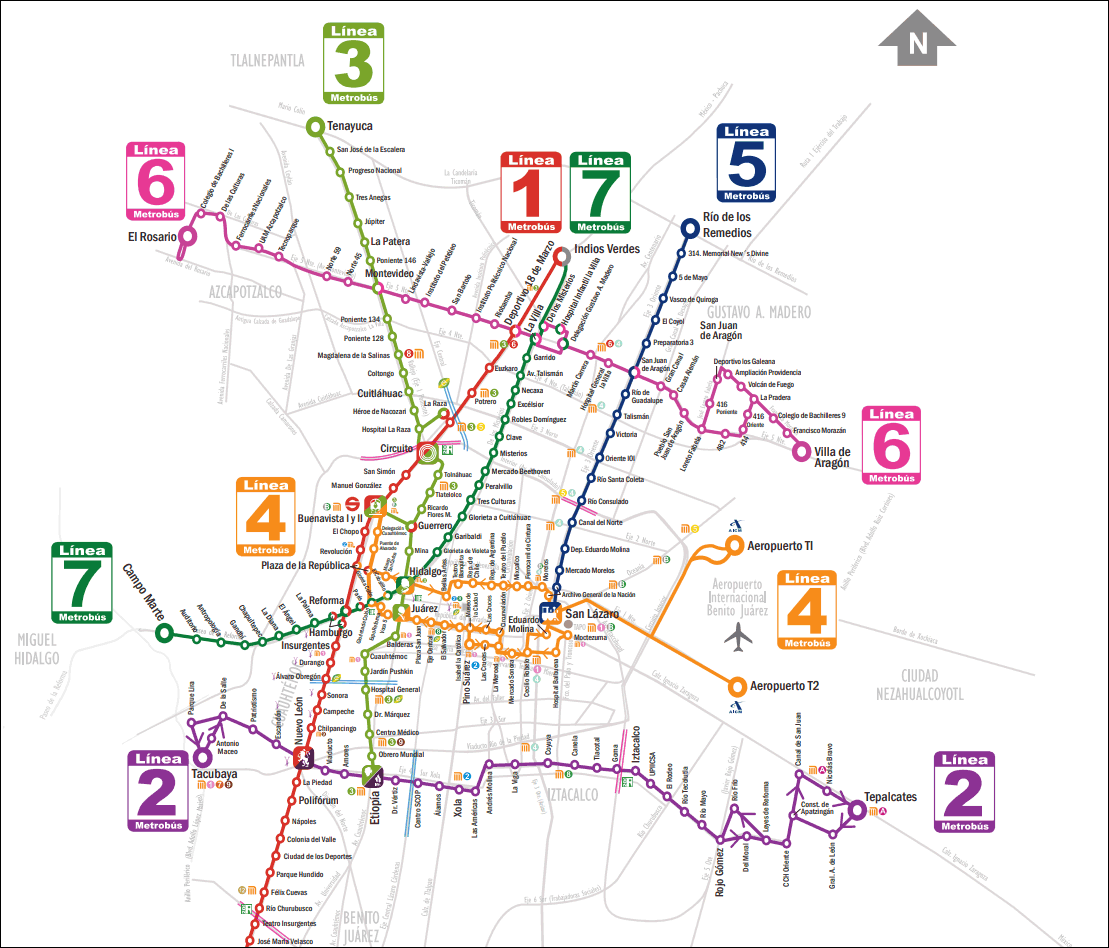
Map of the 7 dedicated BRT lanes within North America’s largest city
Imagine busses that are as fast as rail
Mexico City is one of the largest and most complex urban areas in the world. With more than 20 million residents in the metro region, keeping people moving is a daily challenge. Over the past two decades, the city has become a global leader in bus transit innovation. Proving that buses can be fast, efficient, and reliable when supported by smart policy and modern technology. Here are three strategies Mexico City uses to speed up its transit system.
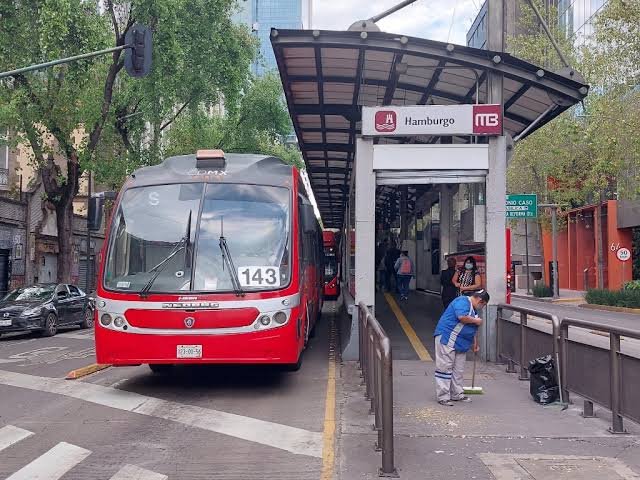
1. Metrobús BRT: Dedicated Lanes That Cut Through Congestion
The launch of Metrobús in 2005 marked a major shift in mobility. Mexico City adopted 7 dedicated lanes for a Bus Rapid Transit (BRT) model to give buses the speed and consistency of rail. These busways are physically separated from general traffic. Often running down the center of major roadways (median lanes) or curbside in constrained urban geometries.
Key elements include:
Physically separated lanes
Elevated platforms for level boarding
Off-board fare payment
High-frequency service on major corridors
The results are clear: Metrobús corridors cut travel times by 30–50%, reduce emissions, and move more than 1.5 million passengers daily. Mexico City’s BRT is now one of the largest in the world and a reference for other Latin American cities.
2. Smart Traffic Signals: Prioritizing Buses at Intersections
Mexico City has implemented transit signal priority (TSP) along high-demand corridors, using real-time bus data, including GPS tracking, an Integrated Mobility Control Center, and more. TSP can adjust traffic lights when a bus approaches an intersection, enabling a seamless transition across the line.
When a bus approaches a signalized intersection, the system estimates:
Distance from the intersection
Current speed
Passenger load (on some corridors)
Whether the bus is on schedule or delayed
This data triggers automated adjustments at the traffic light.
This approach makes travel more predictable, especially in dense zones like Insurgentes and Reforma. As Mexico City expands its digital infrastructure, smart signaling continues to play a growing role in improving speed and reliability across the system.
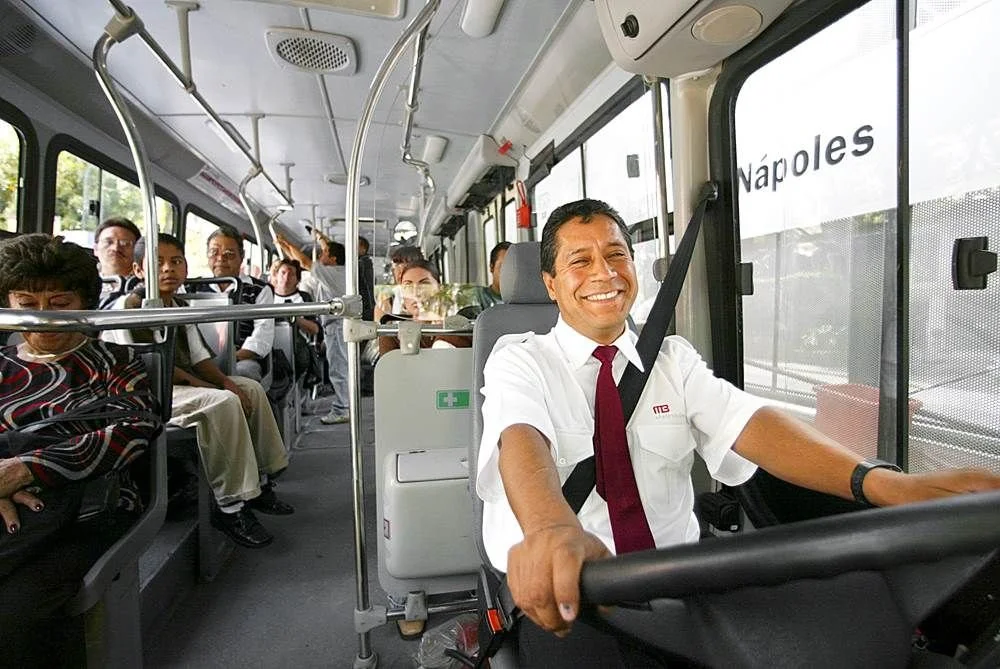
No more waiting to put in the coins
3. Faster Boarding Through Prepaid and Integrated Fares
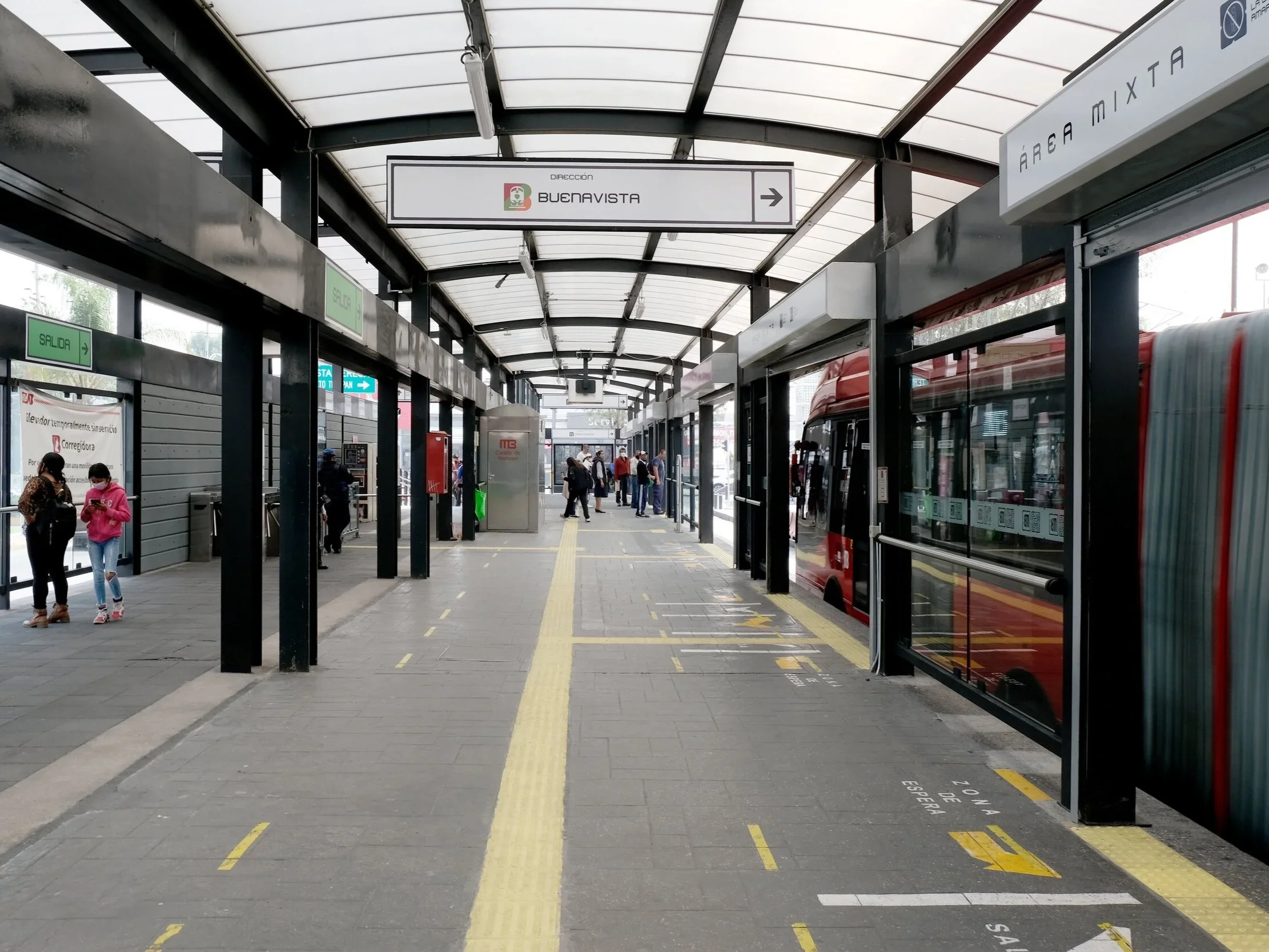
Mexico City’s Metrobús stations are designed to function as efficient, rail-like hubs that dramatically speed up bus operations. Built in the median of major corridors, the stations feature level boarding platforms that align exactly with bus floors, allowing passengers to enter and exit quickly and safely without the delays of steps or ramps. Off-board fare payment removes the bottleneck of paying at the bus door. Dedicated sliding platform doors help regulate boarding, improve safety, and ensure that buses can dock with precision.
Stations are spaced farther apart than traditional bus stops. Allowing for rapid travel between key destinations while maintaining accessibility. Some terminals feature overtaking lanes, enabling express and local services to operate simultaneously without delays
Modern upgrades include:
Level boarding, off-board fare payment, and platform screen doors significantly reduce dwell time and improve safety at Metrobús stations.
Strategically spaced, median-running stations with overtaking lanes allow both express and local services to operate efficiently and avoid bottlenecks.
Real-time arrival screens, wayfinding, and multi-door boarding support high passenger volumes and give Metrobús rail-like performance at a lower cost.